Most of us knew a kid in high school who was in the “style experimentation” stage. A black leather jacket and goth makeup for a couple weeks, and preppy polos the next, then cowboy boots by spring. In the hall, you’d have to squint and ask yourself, “Wait, is that…Jimmy?” It can take a while to develop your style. But once you know who you are, people can spot you from the other end of the hall. That is what brand consistency across multiple locations does for a company: customers recognize you before they are close enough to read the logo.
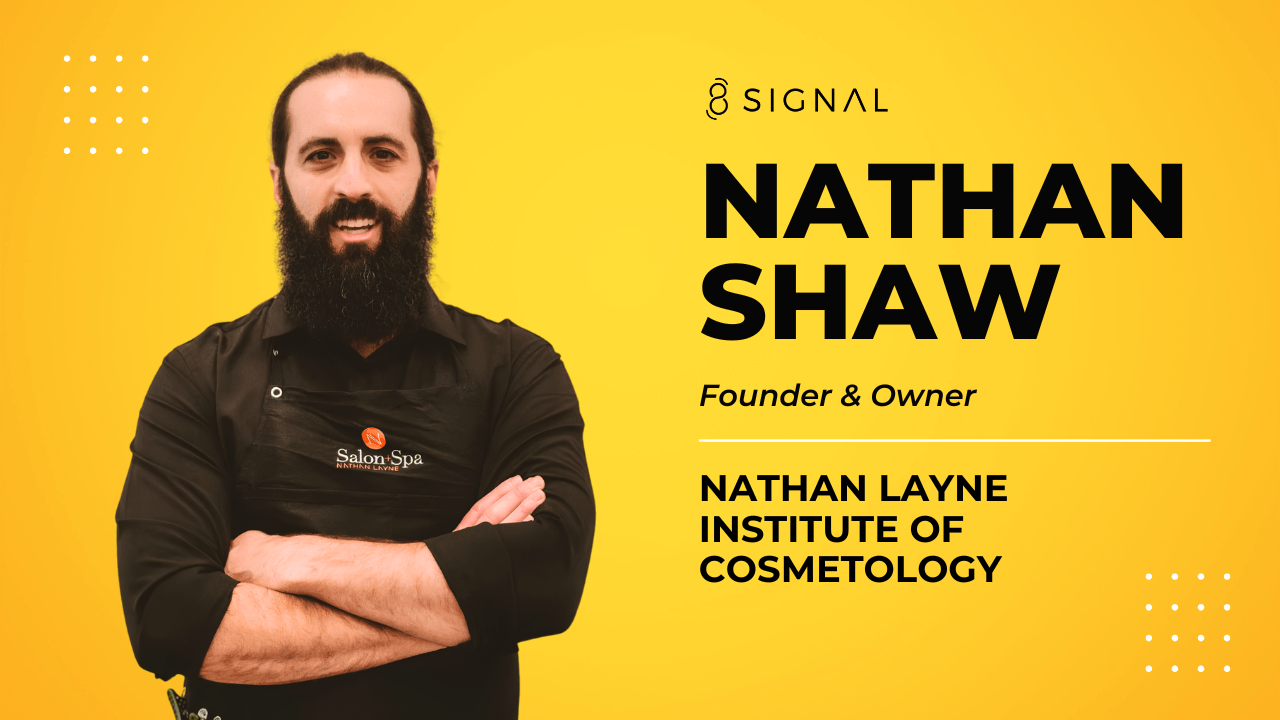
Nathan Shaw is the founder and owner of Nathan Layne: three cosmetology schools in Idaho, plus a franchise of waxing salons. Nathan Layne’s three cosmetology schools and franchise of waxing salons KNOW their style. They’re style experts who help others look and feel like the best version of themselves. But when it came to marketing and branding across their multiple locations and channels, they were all over the place. There wasn’t brand consistency. That made it hard for a prospective student to scroll past one of their posts and think, “Love that. Classic Nathan Layne.”
Don’t have time to read this post? Watch the video here!
If you run more than one location, you probably know the struggle. Scroll your own accounts side by side and they read like three different companies who happen to share a logo. That is what happens when nobody owns the style.
Why Brand Consistency Across Multiple Locations Falls Apart
Across Nathan Layne’s locations and channels, marketing was happening. It just wasn’t coordinated.
“We were very scattered. We used a lot of different vendors and tried to have people on staff just make social media posts.” — Nathan Shaw, Founder and Owner, Nathan Layne
That’s actually an issue for a lot of businesses, and the mismatch of styles builds one post at a time. Each decision is reasonable on its own. A vendor gets hired for the piece that needs the most help. Someone else takes the website. A stylist does great work in the salon, so whoever is nearby posts the photo. Every one of those calls makes sense. Together they produce activity without direction, which is how a company ends up with too many marketing vendors and no unifying style. As Nathan put it, “There was no flow to it, no consistency.”
Think about the people and vendors who could publish something with your company’s name on it this week. Can they each tell you what your brand sounds like? If you can’t answer that quickly, that’s probably a source of your marketing inconsistency.
Getting Your Brand Voice Out of a Document and Into Your Marketing Channels
Many companies chasing brand consistency across multiple locations reach for a document first… and that’s the right call. It’s vital to document your strategy.
Knowing your style and living it are two different things, though. Plenty of people can describe their own taste in detail and still end up with a totally uncoordinated outfit. A brand guide sitting in a shared drive has never posted anything, and the person publishing in the middle of a busy day isn’t likely to stop and consult a PDF.
Nathan decided to bring in outside marketing help so their style would show up the same way across every school and every channel. His hesitation was about what hiring a Fractional CMO would actually involve.
“The thing that got me over that reservation was simply the calls we had with 8 SIGNAL, kind of exploring it, doing a little bit of their homework, realizing that there was a great culture fit and that ultimately they were going to help us find our voice as a brand.” — Nathan Shaw, Founder and Owner, Nathan Layne
If you hired someone tomorrow to run your social accounts, could they sound like you by Friday, without you sitting next to them? If not, it’s likely that your brand’s voice hasn’t become your company’s style yet.
Brand Consistency Across Multiple Locations Starts With Accountability
Every location drifting into its own look is a symptom. The cause is that Marketing has no owner, so it defaults to whoever has time that week.
Nathan points to two EOS tools as the ones that made the engagement work, and his explanation of what he means by them is the whole answer:
“The EOS tools and principles that work the best with us working with 8 SIGNAL as a fractional CMO is the L10s and the accountability chart. And what I mean by that is having the CMO on our weekly leadership L10s to really understand the business to know how to drive our voice.” — Nathan Shaw, Founder and Owner, Nathan Layne
Our Fractional CMO sat in their weekly Level 10 and their quarterlies. We revamped the website. We helped them hire a social media content manager, then met with her in a separate L10 so the message stayed aligned week to week. Nathan Layne’s businesses run on EOS (and so do we), so there was no cadence to invent. We plugged into the one that already existed.
The weekly meeting is where the brand voice moves past being a document and actually gets used. People get busy, and a voice nobody checks on slides, unless somebody in the Marketing Seat is looking at what went out and asking whether it still sounds like the company.
Look at your own Accountability Chart. Who is in the Marketing Seat? If the honest answer is that it is split across three people who each own a piece, that unfilled seat is likely where your inconsistency comes from, and brand consistency across multiple locations will keep slipping until somebody owns it. Then give that seat a number on the Scorecard, so drift gets caught early in a Level 10 rather than surfacing six months later as a vague sense that the brand looks off.
One Style Means Deciding Who You Are Not For
“Trying on styles” is the right image for a reason beyond the joke about teenagers. At the core, it’s about trying to appeal to everyone at the same time.
“Before, I think we were trying too much to be all things to all people. And we realized that’s not what we want. We want to work with the right people.” — Nathan Shaw, Founder and Owner, Nathan Layne
A consistent brand is a filter. It tells some people this is not for you (which is uncomfortable until you notice the people who do respond are the ones you actually wanted). Nathan’s version of the payoff was about resonance, that the people who are like them have to recognize the brand to work with them.
What is your marketing currently asking every audience to see itself in? Pick the one you want and let the style follow it.
Three Schools, One Style
Nathan Layne had great style to start with. But they needed that style to translate across their locations and social media channels. That happened when they gave marketing an owner, created a standing appointment on the weekly leadership agenda, and clarified their ideal customer. Their three schools ended up with a consistent brand voice and a cleaner feel, in Nathan’s words more on brand for who they actually are. Their marketing look finally came together.
Brand consistency across multiple locations starts with marketing leadership and accountability. An 8 SIGNAL Fractional CMO takes that seat, sets the standard with you, and holds it in your weekly Level 10 alongside the rest of your leadership team.
Ready to pull your marketing look together? Let’s talk about how a confident, defined marketing style could help your business.
FAQs
Brand consistency across locations means a customer encountering any one of your locations gets the same voice, look, and experience as they would at any other. It covers the visible layer (logo, colors, photography, the words in a caption) and the harder layer underneath it, which is what the brand sounds like and who it is speaking to. A business has it when someone can see a post with no logo on it and still know who published it.
Brand consistency matters across multiple locations because recognition compounds and inconsistency resets it. Each time a customer meets the same voice and look, that impression builds on the last one, while a customer who meets three different versions of your company starts over every time. Consistency also decides whether your locations reinforce each other or quietly compete as separate brands that happen to share a name. Internally it ends the guessing, because anyone publishing has a standard to check their work against.
An example of brand consistency across multiple locations is a customer seeing a post from one location and an ad from another and being unable to tell which team made which, because both sound like the company rather than like whoever published them. In practice that comes from three things working together: one documented brand voice, one person accountable for what goes out, and a standing meeting where the standard gets held. The counter-example is far more common, where several vendors and staff members each publish in their own voice and the accounts end up reading like separate companies sharing a logo.
You keep a brand voice consistent by getting clear on what that voice actually is, then making one leader accountable for holding it. Clarity comes first: if nobody can say in a sentence what the brand sounds like and who it is speaking to, every person publishing is guessing, and guessing produces drift. Accountability is what makes the clarity hold, which means a named owner who reviews what goes out and reports on it in the leadership team’s weekly meeting rather than a standard everyone is assumed to know. Documentation supports both, and by itself it changes nothing.
You measure brand consistency across locations by putting a marketing measurable on the Scorecard and auditing what gets published against your own brand standard on a set schedule. A workable version: each week, the person who owns marketing reviews everything published across every location and reports the share of it that meets the standard. Pair that number with the leading indicators you already track, like engagement and inbound inquiries by location, so consistency is not judged on taste alone. The point of a measurable is that drift becomes visible in a Level 10 in week two instead of surfacing six months later as a vague sense that the brand looks off.
No, brand guidelines alone don’t create brand consistency across multiple locations. They define the standard, and someone still has to hold people to it. A guidelines document tells people what the brand should sound and look like, but it cannot make a busy location manager consult it before posting. That gap is the practical case for a Fractional CMO: guidelines start working when a marketing leader owns the standard, reviews what goes out, and answers for it in the leadership team’s regular meeting rhythm.
Hiring more marketing vendors often makes brand consistency worse because each vendor optimizes for its own scope, so nobody is accountable for how the pieces add up. This is the most common path to having too many marketing vendors: a company adds a specialist every time a specific thing underperforms, and ends up with several competent partners producing work in several different voices. Even when vendor quality is fine, you still need marketing leadership to manage them.
A Fractional CMO holds the marketing leadership seat across all locations, so strategy, voice, and priorities are set once instead of location by location. For a multi-location business that typically means owning the brand standard, setting the marketing priorities in the leadership team’s Level 10, directing vendors and agencies rather than adding to them, and hiring the internal marketing staff the business needs long term. 8 SIGNAL’s Fractional CMOs work inside the client’s existing EOS cadence, including L10s and quarterlies.
Marketing needs to be owned by someone on the leadership team, and in most small companies that shouldn’t be the Visionary or Integrator by default. Marketing without an owner typically gets absorbed by whoever has capacity that week, which is how inconsistency begins. Naming the seat on the Accountability Chart, even before you can afford a full-time hire, is what makes consistency possible, and a Fractional CMO is one way to fill that seat without a full-time salary.